 HowMuchIsIt
Stamp Value Checker
Upload clear photos to identify your stamp, assess condition and compare its likely value with real market prices.
Drop a photo of stamp here or tap to check its value
JPG, PNG, WebP, HEIC • Max 50MB • 1 free scan

Analyzing with AI…
Identifying the item and matching value clues


Quick answer: Most ordinary stamps and mixed collections are worth about $5–$100, with common packet material often selling for only $5–$15 per lot. Better sets, classic issues and small country collections frequently bring $30–$200, while scarcer singles and specialist lots can sell for $200–$2,000. Major errors, iconic classics and exceptional collections can exceed $10,000, but catalogue value is not the same as resale value. A photo check should compare identification, gum, centering, perforations and recent market evidence.
Last updated: August 19, 2026
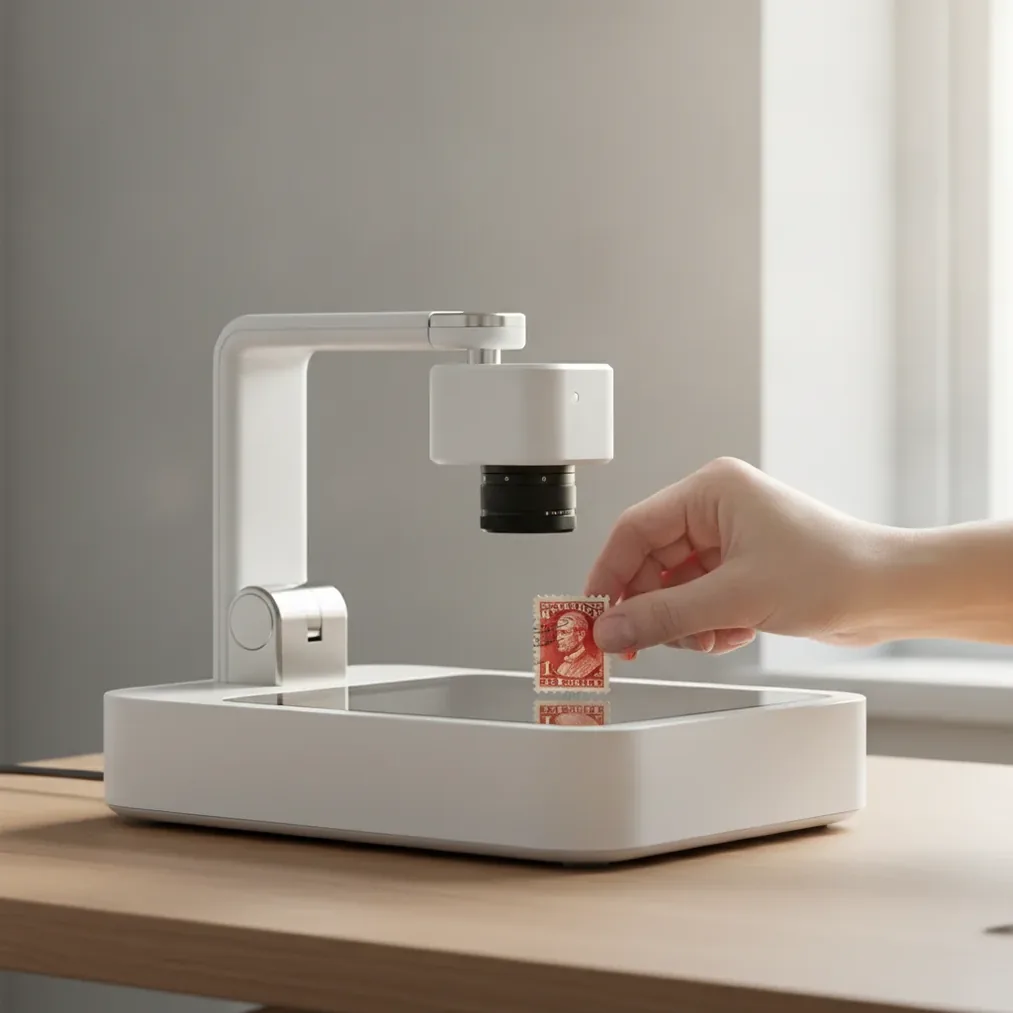
How to check the value from a photo
Photograph the front
Take a sharp, evenly lit photo showing the full design, margins and perforations. Include several stamps in one image only when checking a set or collection.
Photograph the back
Add a clear reverse image so gum condition, hinge marks, thinning and other faults can be considered. These details can separate mint never hinged material from lower-value hinged examples.
Review the identification
Confirm the country, denomination, design, approximate date, cancellation and any suspected error or variety. Similar-looking stamps can have very different values.
Compare realistic prices
Use the photo result as a starting point, then compare condition-matched market examples rather than relying on an ideal catalogue figure. Seek expert certification before selling a potentially valuable error or classic issue.
How much are my stamps worth?
Most stamps are worth little individually: common material typically sells in $5–$15 lots, while mixed collections and ordinary singles commonly fall within $5–$100. Exceptions include scarce classics, verified errors and well-preserved specialist material.
| Value tier | Typical material | Typical market range |
|---|---|---|
| Low | Kiloware, packet stamps, modern commemoratives and beginner collections | Under $20; often $5–$15 per lot |
| Collector | Better common sets, mid-grade classics and small country collections | $30–$200 per lot |
| Scarcer | Better airmails, varieties, plate blocks and fine classic singles | $200–$2,000 |
| Exceptional | Major errors, iconic rarities and important intact collections | $10,000+ |
These 2025–2026 ranges cover both online and specialist venues. A large collection is not automatically valuable: an eBay community listing described as a huge stamp collection started below $10 in 2023 and received no bids.
It takes under a minute to scan an item to check its value.
Catalogue values versus real stamp prices
Catalogue values are reference figures, not guaranteed sale prices. Typical online resale can be far lower because catalogues often assume desirable examples sold at retail, while actual buyers discount common, damaged or poorly centered material.
Stanley Gibbons, Scott, Michel and Yvert catalogues help identify issues and compare relative scarcity. According to the 2025–2026 market analysis in the supplied research, average-condition stamps may realize around 30–50% of catalogue value, while common sets or collections with low-hundreds catalogue totals frequently bring only 10–40% at eBay and general auctions.
Asking prices are also not proof of value. In 2025, eBay listings labeled as rare ranged from $118.75 to $1,500 and often accepted Best Offer, while another Benjamin Franklin one-cent stamp was advertised at $325. A useful stamp value checker gives more weight to completed, condition-matched sales than ambitious listings.
What makes a stamp valuable?
Scarcity, condition, authenticity and collector demand have the greatest effect on stamp values. Age alone does not create value, because many early- and mid-20th-century issues were printed in large quantities.
| Factor | Effect on value |
|---|---|
| Major error | Inverted designs, missing colors and dramatically shifted overprints can reach the highest tier when genuine. |
| Key issue | Early national issues, classic 19th-century stamps and desirable airmails can command strong demand. |
| Centering | Very Fine centering and clean perforations sell above off-center or damaged examples. |
| Authenticity | Certificates from PSE, PF, RPSL or BPP increase confidence for valuable classics, overprints and errors. |
| Completeness | Documented country runs and intact specialist collections can attract more interest than unsorted albums. |
| Demand | A high catalogue figure does not ensure a strong sale when few collectors pursue the area. |
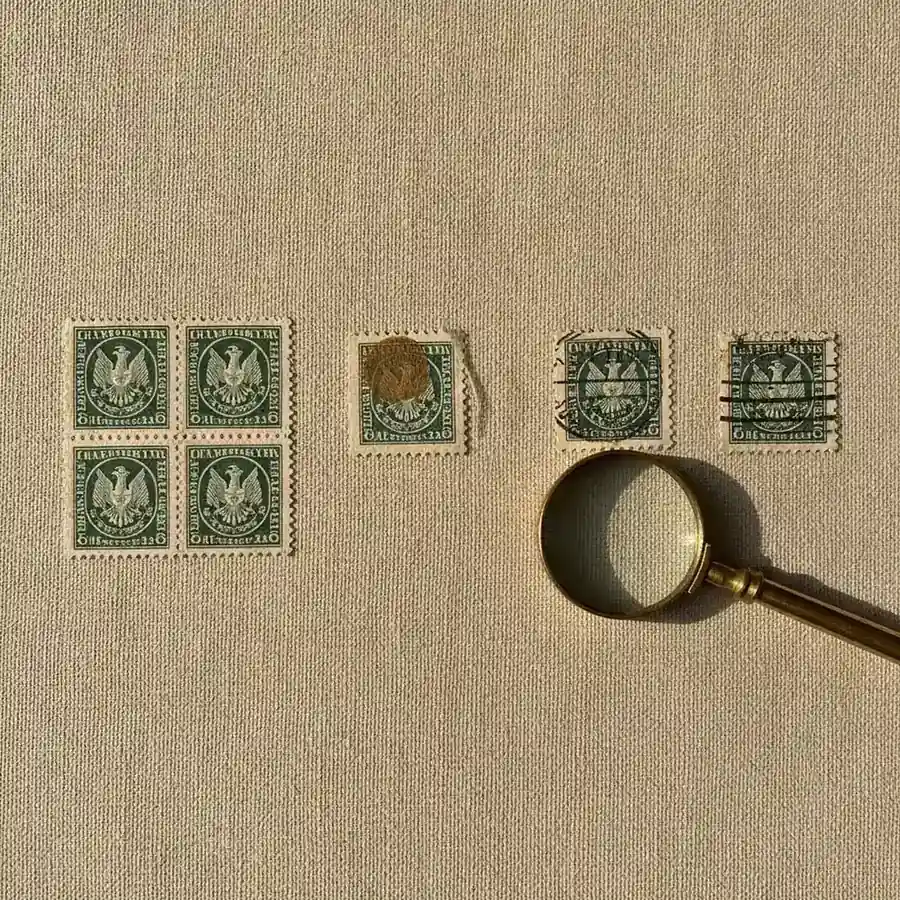
Mint never hinged, hinged and used condition
Mint never hinged stamps generally command a premium over mint hinged examples, especially among 20th-century and modern issues. Hinge remnants or disturbed gum can reduce value substantially, sometimes to half or less of mint never hinged retail.
Inspect the back for original gum, hinge marks, thinning and discoloration. On the front, check centering, perforations, creases, tears, toning and the cancellation. Very Fine examples with balanced margins and clean perforations are favored, while heavy toning and physical damage lead to steep discounts.
Used stamps can still be valuable when the issue is scarce or the cancellation is desirable and authentic. Suspect rare cancels, altered gum, forged overprints and unverifiable errors are commonly discounted or avoided until expertized.
Documented stamp sales and market examples
Exceptional stamps have achieved $18,500–$175,000, but those results are not representative of an ordinary album. The examples below separate completed transactions from asking prices and unsold material.
| Item | Price | Status and venue | Year |
|---|---|---|---|
| 1840–1940 worldwide collection | $175,000 | Dealer-reported, eBay-linked sale | 2017 |
| Upright Jenny error sheet | $61,000 | eBay and specialist-handled sale | 2017 |
| High-grade Penny Black | $18,500 | eBay premium sale | 2017 |
| US 10-cent red airmail, mint never hinged | $89.95 | eBay asking price | 2025 |
| Benjamin Franklin green one-cent stamp | $325 | eBay asking price | 2025 |
| Huge stamp collection | Under $10 start | No bids on eBay | 2023 |
The three 2017 sales remain historical top-end benchmarks cited in 2025 market commentary. They should not be applied to a visually similar stamp without exact identification, condition review and authentication.
How the photo estimate is calculated
A photo estimate combines visible identification and condition clues with price ranges for comparable material. It is an automated estimate, not a certified appraisal or an authenticity certificate.
The process reviews the apparent country, denomination, design, issue type, cancellation, centering, perforations and visible faults. Front and back images help distinguish mint never hinged, hinged and used condition. The estimated range should then be checked against completed sales and adjusted when the exact variety or gum condition cannot be confirmed from a photo.
Major errors, rare overprints and potentially valuable classics require physical examination by a qualified specialist. Last reviewed: August 19, 2026.
Where to sell stamps
Common $5–$100 lots are usually suited to broad online marketplaces, while $200–$2,000 specialist material may benefit from a stamp dealer or philatelic auction. Five-figure candidates should be authenticated before they are offered.
- Online marketplace: Useful for identified singles, sets and modest collections with clear photos and realistic prices.
- Stamp dealer: Appropriate when you want an informed review and a direct offer, though an offer may differ from retail value.
- Specialist auction: Better suited to certified errors, important classics and organized collections likely to attract dedicated bidders.
- Collection lot: Practical for common albums, but unsorted bulk material may receive little interest even below $10.
Describe gum, hinging, faults and certificate status accurately. Do not use an advertised rare price as the expected result unless a comparable example actually sold.
Compare asking prices with completed transactions when reviewing the eBay stamp marketplace, because a listing price does not prove that a stamp sold.
Check it with one photo
The scanner on this page gives you one free check. For unlimited scans, sold-price comparisons, and identification of coins, antiques, cards, and more, the free Lens app does the same job from your phone camera.
Frequently Asked Questions
How accurate are photo stamp value estimates?
A clear front-and-back photo can support identification and a condition-based price range, but it cannot always confirm watermarks, repairs, gum alteration or authenticity. Treat the result as an estimate and obtain expertization for a potentially valuable error or classic stamp.
Why is my stamp worth less than the catalogue value?
Catalogue figures generally reflect reference retail values for desirable condition, not a guaranteed cash price. Average material may sell around 30–50% of catalogue, and common collections can realize only 10–40% at online or general auctions.
Are old stamps always valuable?
No. Many early- and mid-20th-century stamps were produced in large quantities, and ordinary examples may sell for only $5–$15 per lot. Scarcity, condition and demand matter more than age alone.
Are mint stamps worth more than used stamps?
Mint never hinged stamps commonly receive a premium over hinged examples, and disturbed gum can reduce value to half or less of mint never hinged retail. A scarce used issue can still be valuable when its cancellation and condition are desirable.
Are First Day Covers worth money?
Most modern First Day Covers and mass-market commemorative sets have minimal resale value. The supplied 2025–2026 research places many in lots worth only a few dollars unless they have unusual scarcity or demand.
How can I tell if a stamp error is genuine?
Compare the suspected error with the normal issue and look for documented inverted designs, missing colors or shifted overprints. Valuable errors should have certification from an expert body such as PSE, PF, RPSL or BPP.
Should I sell a stamp collection as one lot?
A common or unsorted collection may be easiest to sell together, but its return can be low; one 2023 eBay collection received no bids despite starting below $10. Organized collections with identified key stamps, catalogue references and condition notes tend to present better than unidentified bulk lots.