 HowMuchIsIt
Sneaker Value Checker
Upload sneaker photos to identify the model and colorway, then compare condition-matched StockX and GOAT market data.
Drop a photo of sneaker here or tap to check its value
JPG, PNG, WebP, HEIC • Max 50MB • 1 free scan

Analyzing with AI…
Identifying the item and matching value clues


Quick answer: Most sneakers are worth about $50 to $300, although limited collaborations and older deadstock pairs can sell for $300 to $1,000 or more. A large 2026 marketplace dataset reported a $175 average sneaker sale price, including $252 for Air Jordan and $200 for Nike. Exact value depends on the SKU, colorway, size, condition, release history, original box, accessories and proof of purchase. Use a sneaker value checker as a starting estimate, then verify it against recent sales of the same size and condition.
Last updated: August 19, 2026
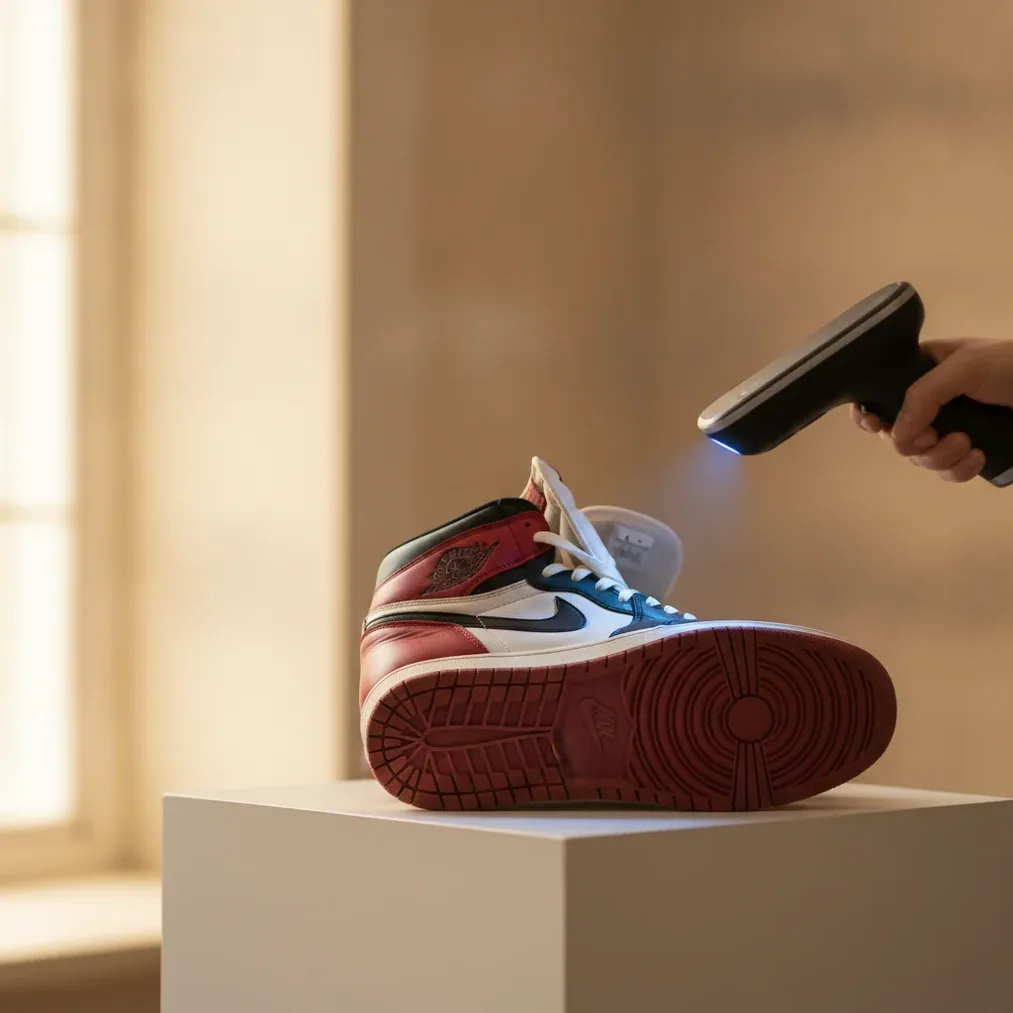
How to check the value from a photo
Photograph both sneakers
Take clear photos of the side profiles, toe boxes, heels, outsoles and size tags. Include visible wear, damage and yellowing rather than hiding flaws that could move a $300 estimate into a lower tier.
Capture the SKU and colorway
Photograph the label inside the shoe and the box label when available. The exact SKU, colorway and size separate a common $50–$130 release from a scarce pair potentially worth $300 or more.
Record condition and extras
State whether the pair is deadstock, lightly worn or heavily worn. Add photos of the original box, tissue, extra laces, hang tags and receipt because completeness can support a stronger price.
Compare matching market records
Review StockX and GOAT data for the same SKU, size and condition. Give more weight to recent completed transactions than asking prices, then account for selling costs before deciding whether a $175 sale is worthwhile.
How much are my sneakers worth?
Common sneakers are usually worth about $50–$130, mainstream in-demand pairs often fall around $130–$300, and scarce collaborations or older deadstock releases can reach $300–$1,000+. Most pairs are not rare, and broad distribution or repeated restocks can keep recognizable models near retail or below it.
| Value tier | Typical range | Common profile |
|---|---|---|
| Low | $50–$130 | General-release staples, mass-restocked Dunks and Air Force 1-style models |
| Typical | $130–$300 | Mainstream Jordan, Dunk, New Balance and ASICS colorways with steady demand |
| High | $300–$1,000+ | Limited collaborations, scarce releases and older deadstock pairs |
A large 2026 marketplace dataset placed the average tracked sneaker sale at $175. Air Jordan averaged $252 and Nike averaged $200, but these brand averages do not identify the value of a particular release, size or condition.
At the premium end, 2026 valuation guides placed Travis Scott Jordan 1 Highs around $750–$1,800 depending on condition. Those figures are valuation-guide ranges, not guaranteed offers or verified transactions for every colorway and size.
If you keep asking yourself how much is it worth, a photo scan is the fastest first check.
How to use StockX and GOAT sneaker comps
A reliable sneaker value lookup compares the exact SKU, colorway, size and condition rather than using the model name alone. StockX and GOAT market records are useful reference points, but an asking price is not proof that a pair sold for that amount.
- Match the style code or SKU printed on the interior label and original box.
- Confirm the exact colorway and release version, including whether it is an original run, retro or later restock.
- Select the same size because prices can vary across sizes.
- Separate deadstock market data from used listings.
- Prefer recent completed sales over active listings with unaccepted prices.
No item-level sold-comparable table is presented here because the supplied research did not include independently verified transaction records. Instead, the defensible benchmarks are the $175 overall average, $252 Air Jordan average and $200 Nike average from the large 2026 marketplace dataset.
StockX reported more than 60 million lifetime trades and 20 million unique buyers in 2025. Its 2025 Big Facts report also recorded a 45% year-over-year sales increase, showing why recent marketplace data can be more informative than an old price screenshot. Readers can review the StockX 2025 Big Facts report for its reported 2025 resale trends.
What affects sneaker resale value?
Colorway, scarcity, condition and completeness usually matter more than age alone. A frequently restocked pair may remain in the $50–$130 tier, while a scarce collaboration in strong condition may reach $300–$1,000+.
| Factor | Effect on value | What to verify |
|---|---|---|
| Colorway | Rare or collaboration colorways can command higher prices | Exact SKU and release name |
| Release history | Frequent restocks reduce scarcity and can hold value near retail | Original release, retro or restock |
| Condition | Creasing, heel drag, outsole wear and yellowing lower value | Photographs from every side |
| Deadstock status | Unworn pairs generally command the highest price | No wear, complete accessories and accurate description |
| Box and accessories | Completeness helps, especially for premium releases | Box, tissue, tags and extra laces |
| Proof of purchase | Provenance can reduce buyer concern about counterfeits | Receipt or order confirmation |
| Size | Demand must be checked for the specific size | Interior and box labels |
Air Jordan carried the greatest resale weighting by revenue and sales volume in 2026 marketplace tracking, with Nike, adidas, New Balance and ASICS also prominent. Brand demand helps, but it does not mean every Jordan is worth the $252 brand average.
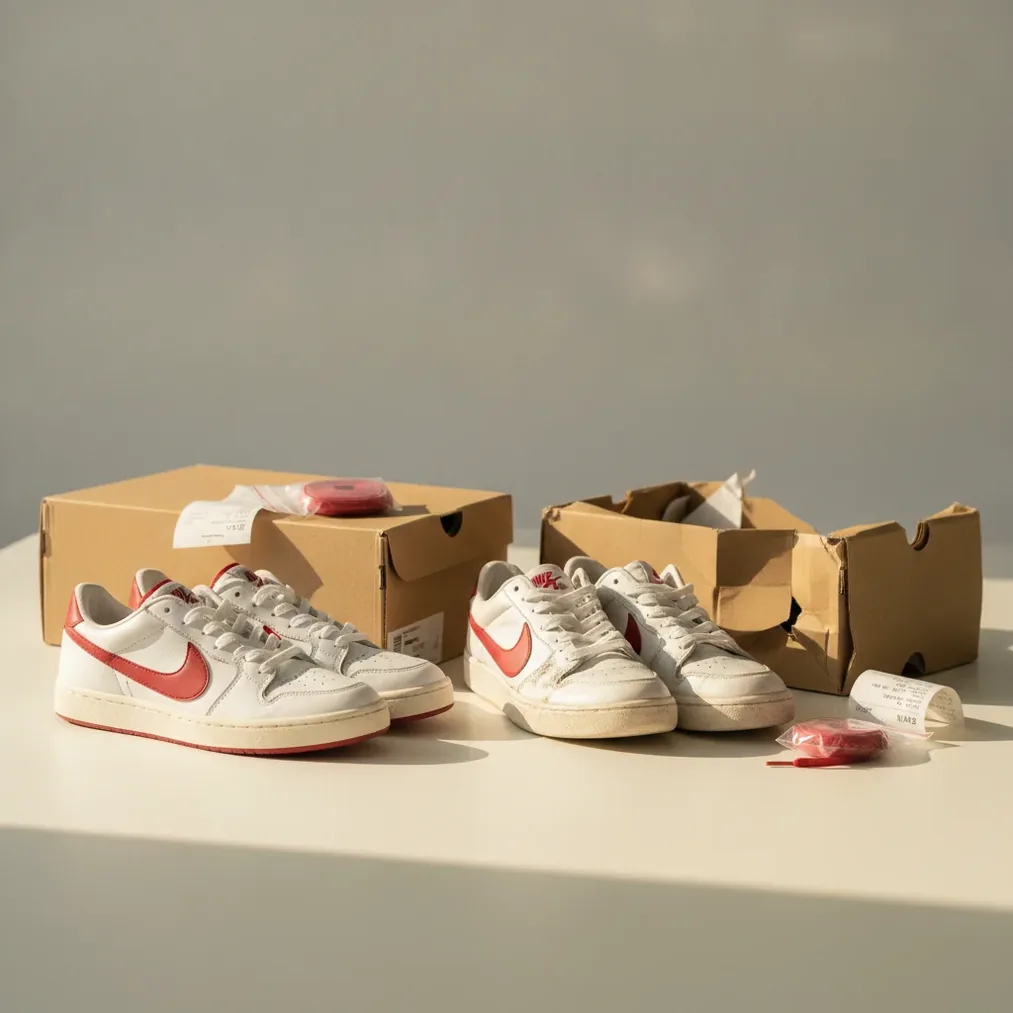
Deadstock versus worn sneaker value
Deadstock sneakers with the original box and accessories usually command more than worn examples of the same release. Light wear may still retain meaningful value, but creasing, yellowing, outsole wear and heel drag can reduce a pair from a higher tier to the $50–$130 range.
Photograph the toe boxes for creasing, heels for drag, midsoles for yellowing or separation, and outsoles for lost tread. Also disclose stains, odors, replacement insoles, repairs and missing laces so the estimate reflects what a buyer will receive.
Terms such as “VNDS” can be interpreted differently by buyers. A photo-based estimate is stronger when it describes visible wear directly instead of relying on a condition label. The original box, tissue, hang tags, extra laces and receipt can support value, but 2026 valuation guides emphasize that shoe condition and desirability drive more of the price than the box alone.
Where should you sell valuable sneakers?
Use a sneaker marketplace when authentication and access to a large buyer base matter, or consider local and direct-sale options when you want to control the transaction. Compare the amount you would actually receive rather than assuming a $175 sale price equals $175 in profit.
| Option | Best suited to | Main limitation |
|---|---|---|
| StockX | Pairs with active market data and buyers seeking authentication | The latest sale may not match your size or condition |
| GOAT | New or used pairs that can be compared by condition | Active asking prices may not become completed sales |
| Consignment shop | Sellers who prefer store handling and local exposure | The displayed price is not necessarily the seller’s net amount |
| Direct local sale | Buyers who can inspect the shoes in person | Seller must manage payment, safety and authenticity concerns |
Profit is not automatic. A 2026 analysis reported that 53% of sneaker resale products had negative returns in 2025, while another 2026 market summary said about 25% of items sold on StockX traded below retail.
How this sneaker value estimate works
The estimate identifies the photographed model and then places it against researched $50–$130, $130–$300 and $300–$1,000+ tiers. It is an automated market estimate, not a guaranteed sale price, authentication decision or certified appraisal.
The method prioritizes exact SKU and colorway, release history, size, deadstock or worn status, visible condition, box and accessories, proof of purchase and recent marketplace evidence. The Lens app can help organize an initial photo-based estimate, but users should confirm premium pairs through current condition-matched records and an appropriate authentication process.
Common myths can inflate expectations: not every Jordan is valuable, old sneakers are not automatically scarce, a box does not create demand, and Dunk or Air Force 1 recognition does not guarantee profit. StockX’s best-selling sneaker in its 2025 Big Facts report was the ASICS Gel-1130 Black/Pure Silver, illustrating that mainstream lower-priced pairs can dominate sales volume.
Last reviewed: August 19, 2026. Market prices can change after restocks, new releases and shifts in buyer demand.
Check it with one photo
The scanner on this page gives you one free check. For unlimited scans, sold-price comparisons, and identification of coins, antiques, cards, and more, the free Lens app does the same job from your phone camera.
Frequently Asked Questions
How accurate are photo sneaker value estimates?
A photo estimate can identify the likely model, colorway and condition tier, but it cannot guarantee a selling price. Accuracy improves when photos include the SKU, size tag, outsole, original box and all wear, followed by comparison with recent sales of the same size and condition.
How much are used sneakers worth?
Used value depends on the release and wear, but common pairs often fall within the <strong>$50–$130</strong> low tier. Lightly worn scarce pairs may be worth more, while creasing, heel drag, yellowing and missing accessories reduce value.
Are all Air Jordans valuable?
No. Air Jordan averaged <strong>$252</strong> in a large 2026 marketplace dataset, but many general-release retros trade near retail or below it when supply is high. Exact colorway, size, condition and restock history matter.
Does the original sneaker box increase value?
The original box can support value and buyer confidence, especially for premium pairs, but it does not make an unwanted release valuable. The shoes’ condition, scarcity and colorway remain the primary drivers.
Are deadstock sneakers always worth more?
An unworn complete pair generally commands more than a worn example of the same release. Deadstock status cannot overcome weak demand, however, so a common restock may still remain in the <strong>$50–$130</strong> tier.
Why do sneaker prices vary by size?
Marketplace prices reflect supply and buyer demand for each size. A model-wide average such as <strong>$175</strong> does not replace a comparison with recent records for the exact size.
Do old sneakers become more valuable?
Age alone does not create value. Older sneakers need demand, model significance, scarcity and acceptable condition; deterioration or heavy wear can reduce their price despite age.
Can sneakers sell below retail price?
Yes. A 2026 market summary reported that about <strong>25%</strong> of items sold on StockX traded below retail, and a separate 2026 analysis found negative returns for <strong>53%</strong> of sneaker resale products in 2025.