 HowMuchIsIt
Baseball Card Value Checker
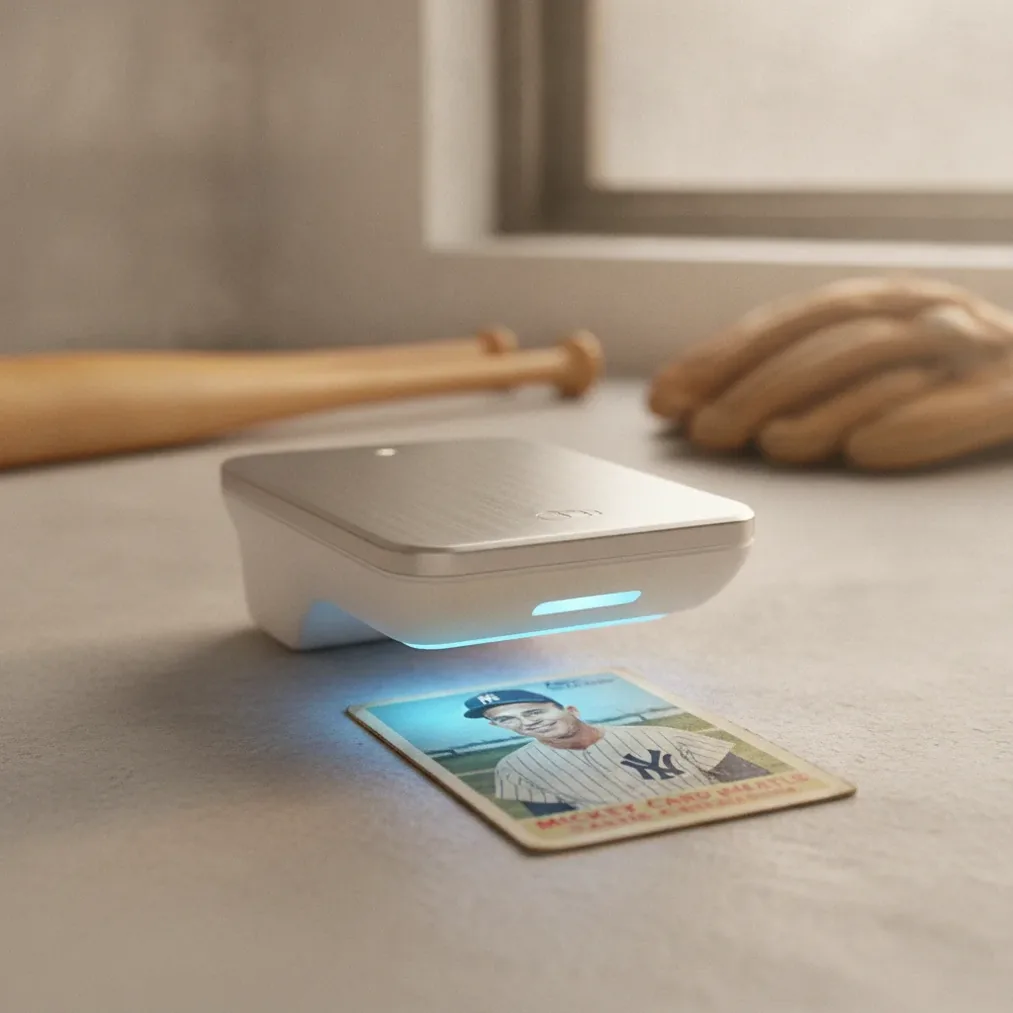
Photograph your baseball card and use the baseball card value checker to identify it, compare relevant sales and estimate its current resale value.
Drop a photo of baseball card here or tap to check its value
JPG, PNG, WebP, HEIC • Max 50MB • 1 free scan

Analyzing with AI…
Identifying the item and matching value clues


Quick answer: Most raw baseball cards are worth under $1, particularly post-1980 commons, according to a 2026 price guide. Junk-wax-era commons often sell for less than $0.10 each in bulk, while graded star cards range from about $499 for a 2018 Topps Update Shohei Ohtani PSA 10 to about $132,000 for a 1952 Topps Mickey Mantle PSA 4 in mid-2026 market data. Pre-war scarcity, player demand, card issue and condition produce the largest differences in a card's value. A photo checker can identify the likely card and surface comparable sales, but the estimate is not a certified appraisal or professional grade.
Last updated: August 19, 2026
How to check the value from a photo
Photograph the front
Place the card on a plain surface in even light and capture the full border. The Lens app can use the player, design, year and card number to suggest an identification.
Add the back and details
Photograph the reverse so the checker can read the set, manufacturer and card number. Enter any visible grading company and numeric grade.
Review the condition
Check centering, corners, creases, stains, surface gloss, writing, trimming and foil chipping. Do not describe a raw card as PSA 10 without professional grading.
Compare matching sales
Use comparable cards with the same year, set, player, card number, variation and grade. Separate raw sales from PSA, BGS or SGC sales before choosing an estimate.
Baseball Card Values by Era and Tier
Most baseball cards are worth less than $1 raw, but scarce pre-war cards, 1950s icons and a small group of high-grade modern rookies can be worth hundreds or thousands of dollars. The most useful starting point is the card's era, followed by its exact issue and condition.
| Card category | Typical value example | What drives the price |
|---|---|---|
| 1980s-1990s commons | Under $0.10 each in bulk | Heavy production and limited player demand |
| Most raw baseball cards | Under $1 | Common issue, unverified condition or limited demand |
| 2018 Topps Update Ohtani #US1, PSA 10 | About $499 | Modern star rookie in top grade |
| 2011 Topps Update Trout #US175, PSA 10 | About $1,050 | Key rookie and PSA 10 condition |
| 1989 Upper Deck Griffey #1, PSA 10 | About $5,640 | Iconic modern rookie with sustained demand |
| 1933 Goudey Ruth #144, PSA 4 | About $21,000 | Pre-war scarcity, player and verified grade |
| 1952 Topps Mantle #311, PSA 4 | About $132,000 | Flagship post-war issue and condition rarity |
The graded figures are mid-2026 fair-market values based on tracked eBay and major-auction comparisons in the supplied 2026 market research. They are reference points, not guaranteed offers.
A free item value checker is the quickest way to triage a whole box of finds.
What Makes a Baseball Card Valuable?
Era, player, issue, scarcity and condition determine how much a baseball card is worth. Age by itself does not create value: many mass-produced 1980s and 1990s cards remain under $0.10 each in bulk.
| Factor | Raises value | Lowers value |
|---|---|---|
| Era | Pre-1945 scarcity and key 1950s issues | Mass-produced junk-wax commons |
| Player | Ruth, Mantle, Cobb, Young, Aaron, Jeter, Griffey, Trout or Ohtani | Common players with little collector demand |
| Issue | T206, 1933 Goudey, early Topps or major rookie cards | Ordinary base cards without rookie or star significance |
| Condition | Sharp corners, clean surface and strong centering | Creases, stains, writing, trimming or print defects |
| Grade | Verified PSA, BGS or SGC grade | Raw condition that cannot be confirmed from photographs |
| Population | Few surviving or high-grade examples | Large graded population and abundant supply |
Card Ladder's Pre-War Vintage Index rose about 25% in 2025, compared with about 18% for its 1946-1983 index. Modern and ultra-modern cards still supplied 33 of 2025's top 50 card sales, showing that scarce vintage and premium modern cards both attract buyers.
Recent Baseball Card Sales and Market Comparisons
Recent comparisons range from $5,640 for a graded Griffey rookie to $7.25 million for a record-setting Mantle. Exact identification and grade are essential because cards of the same player can have radically different prices.
| Card | Grade | Sale or tracked value | Date and context |
|---|---|---|---|
| 1952 Topps Mickey Mantle #311 | PSA 3 | $7.25 million | Major auction, 2024 |
| 1954 Topps Hank Aaron rookie | PSA 9 | $780,000 | Auction, January 2025 |
| 1951 Bowman Mickey Mantle | PSA 9 | $525,000 | Sports auction, April 2024 |
| T206 Cy Young | PSA 6 | $22,500 | April 2026 market table |
| T206 Ty Cobb, bat off shoulder | SGC 4 | $18,500 | April 2026 market update |
| 1993 SP Foil Derek Jeter #279 | PSA 9 | $8,100 | 25 tracked sales through June 25, 2026 |
| 1989 Upper Deck Ken Griffey Jr. #1 | PSA 10 | $5,640 | 42 tracked sales through June 28, 2026 |
These are dated sold or market-tracked comparisons from major auction houses, eBay and mainstream marketplaces. A different grade, variation or alteration can make a listed card unsuitable as a comparison.
How Condition Changes Baseball Card Value
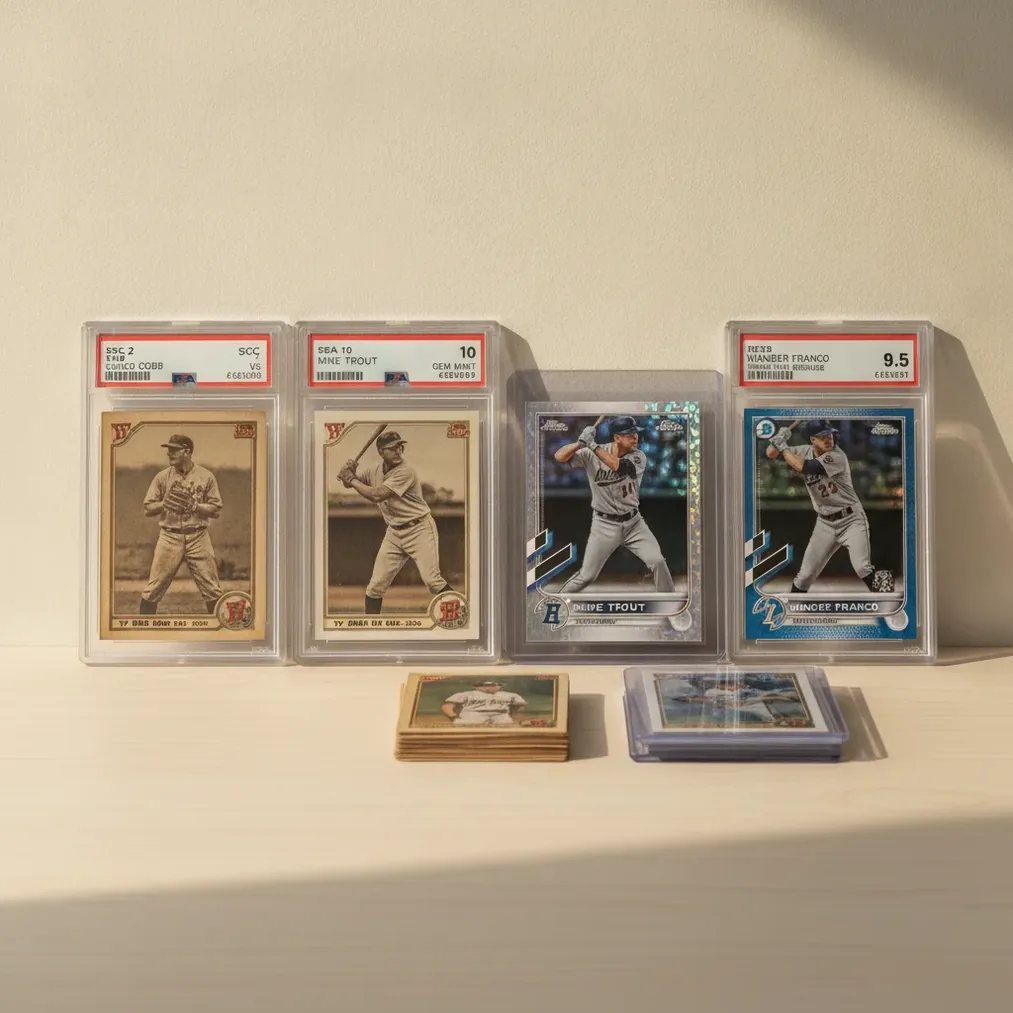
Condition can decide most of a baseball card's price, especially when comparing raw cards with professionally graded examples. A 2026 price guide reports that each vintage grade step can multiply value, while much of a modern card's premium may be concentrated in PSA 10 copies.
Inspect the card under neutral light for centering, corner wear, creases, stains, writing, trimming and lost surface gloss. Foil cards such as the 1993 SP Derek Jeter are especially sensitive to chipping and print defects, which makes high-grade examples much harder to find.
Professional grading by PSA, BGS or SGC verifies an opinion of condition and helps buyers compare cards. PSA and BGS graded more than 800,000 baseball cards in FY 2024, according to Intel Market Research's 2026 report. A photograph can reveal major flaws, but it cannot reliably detect every alteration or guarantee the numeric grade a grading company will assign.
How the Baseball Card Value Estimate Is Calculated
A baseball card value checker produces a useful estimate by matching the photographed card to dated sales with the same set, year, player, card number, variation and grade. It should present a range or relevant comparisons rather than treating an asking price as a completed sale.
- Identification: Read the front and back to determine the issue and card number.
- Era classification: Separate pre-war, post-war vintage, modern and ultra-modern cards.
- Condition review: Record visible defects and keep raw cards separate from graded cards.
- Comparable selection: Favor recent sold results for matching cards and grades.
- Estimate: Use the closest relevant comparisons while disclosing condition or identification uncertainty.
An automated estimate is not a certified appraisal, authentication decision or guaranteed sale price. Rare cards, altered cards and potential six-figure issues require specialist inspection. This page was last reviewed August 19, 2026.
Where to Sell Baseball Cards
Common and mid-priced cards can be offered through mainstream marketplaces such as eBay, while rare graded cards may fit a major sports auction house. Choose the venue by matching the card's expected value, buyer demand and need for authentication.
Before listing, photograph both sides, state the exact card number and disclose creases, stains, writing or other damage. For a graded card, include the company and grade; for a raw card, avoid claiming a professional numeric grade. Compare completed sales rather than unsold asking prices.
High-end pre-war and 1950s cards benefit from broad collector exposure, while inexpensive commons may be more practical to sell in groups because individual junk-wax commons often bring less than $0.10. For additional market context, review the Card Ladder market data used for the 2025 pre-war and vintage index figures.
Check it with one photo
The scanner on this page gives you one free check. For unlimited scans, sold-price comparisons, and identification of coins, antiques, cards, and more, the free Lens app does the same job from your phone camera.
Frequently Asked Questions
How much is my baseball card worth?
Most raw baseball cards are worth under $1, and many 1980s-1990s commons sell for less than $0.10 each in bulk. Scarce pre-war cards, iconic 1950s cards and high-grade modern rookies can be worth hundreds, thousands or more.
How accurate are photo baseball card value estimates?
A photo estimate is most useful when the front, back, card number and visible condition are clear. It cannot confirm authenticity, trimming or a future PSA, BGS or SGC grade, so rare cards should receive specialist inspection.
Are old baseball cards always valuable?
No. Age alone does not guarantee demand or scarcity, and mass-produced junk-wax commons can sell for under $0.10 each even though they are decades old.
Which baseball card players are most valuable?
Recent high-value sales and indices repeatedly feature Mickey Mantle, Babe Ruth, Ty Cobb, Cy Young, Hank Aaron, Derek Jeter, Ken Griffey Jr., Mike Trout and Shohei Ohtani. The exact issue and grade matter as much as the player.
Should I grade my baseball card before selling it?
Grading may help when condition verification materially affects value, but a high grade is never guaranteed. Modern premiums are often concentrated in PSA 10 examples, while lower-grade pre-war cards can remain valuable because surviving copies are scarce.
What defects lower a baseball card's value?
Poor centering, rounded corners, creases, stains, writing, trimming, lost gloss and surface damage lower value. Foil cards can also lose grade because of edge chipping and print defects.
Is a baseball card value estimate a certified appraisal?
No. An automated estimate compares identification details and market sales, but it is not a certified appraisal, authentication result or professional grade.