 HowMuchIsIt
Rock and Crystal Value Checker
Use the rock and crystal value checker by photographing your specimen with Lens to estimate its likely 2026 resale range, mineral type, condition, and collector appeal.
Drop a photo of rock and crystal here or tap to check its value
JPG, PNG, WebP, HEIC • Max 50MB • 1 free scan

Analyzing with AI…
Identifying the item and matching value clues


Quick answer: Most ordinary rocks and crystals are worth $1–$20 each in 2025–2026, and many unattributed field finds have only souvenir value. Attractive hand-sized specimens commonly sell for $20–$80, while desirable minerals may bring $50–$200. Documented specimens from famous localities can reach $200–$1,000+, but four-figure examples are a small fraction of the market. A photo-based result is an estimate, not a certified appraisal or guaranteed identification.
Last updated: August 19, 2026
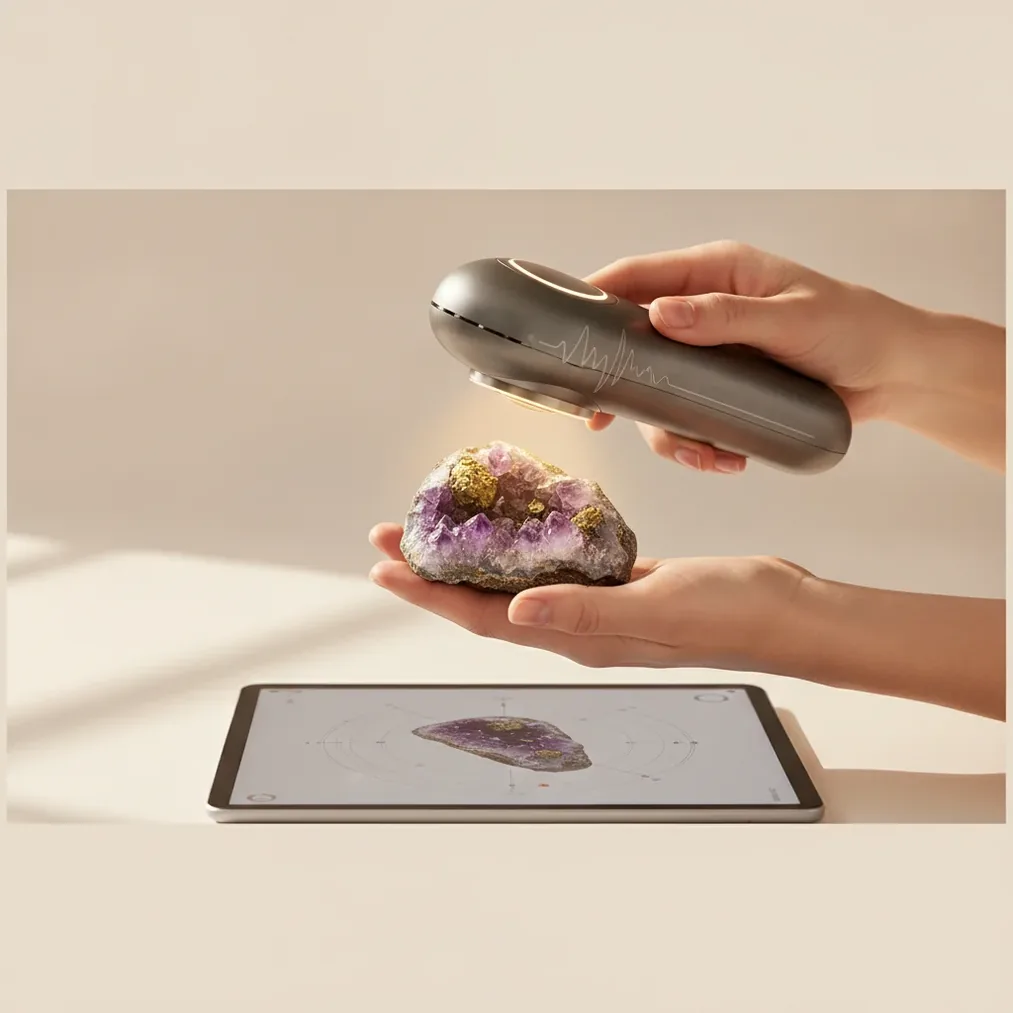
How to check the value from a photo
Photograph the entire specimen
Place the rock in neutral light and capture its overall shape, crystal arrangement, matrix, and color. Include a ruler or common object so its approximate 5–15 cm display size can be understood.
Add close-ups of identifying features
Photograph crystal faces, points, color zones, chips, repairs, and any attached labels. Sharpness, damage, and provenance can separate a $20 specimen from one worth $200 or more.
Enter locality and history
Record where it was found or purchased, including the mine, region, date, dealer, and collection history when known. A credible Sweet Home Mine or Elmwood Mine label can materially affect collector demand.
Compare the estimated range
Review comparable 2024–2025 specimens by species, size, condition, locality, and selling channel. Treat the result as a resale estimate because a photo cannot verify mineral identity or provenance.
How Much Are Rocks and Crystals Worth?
Most common rocks and crystals sell for less than $20 in 2025–2026. Attractive collector specimens generally start around $20, while documented, well-crystallized pieces from famous localities may reach $200–$1,000+.
| Value tier | Typical material | Typical resale range |
|---|---|---|
| Common | Small quartz points, tumbled stones, generic healing crystals | $1–$15 each |
| Bulk material | Low-grade mixed lots or paydirt | $20–$100 per lot |
| Hobby specimen | Attractive amethyst, fluorite, calcite, or pyrite | $20–$80 |
| Desirable species | Good tourmaline, beryl, or topaz without exceptional provenance | $50–$200 |
| High-end collector piece | Large, aesthetic crystals from important localities | $200–$1,000+ |
| Museum quality | Exceptional rarity, aesthetics, condition, and provenance | Several thousand dollars or more |
These specimen ranges are conservative inferences from 2024–2025 eBay categories and specialist-market activity. Museum-quality prices are exceptions, not a realistic expectation for most personal finds.
When in doubt, run it through How Much Is It Worth before donating or tossing anything.
Representative Sold and Market Examples
Comparable examples range from about $25 for mixed stones to about $1,500 for documented Sweet Home Mine rhodochrosite. These are representative 2024–2025 market observations synthesized from typical activity, not individually verified transaction records.
| Example | Channel and date | Observed price |
|---|---|---|
| Mixed tumbled stones and small crystals, about 1 kg | eBay, 2025 | About $25 |
| Hand-sized Brazilian amethyst cluster | eBay, 2024–2025 | About $35 |
| Large Arkansas quartz point cluster | eBay, 2025 | About $80 |
| Elmwood Mine fluorite with barite | Specialist dealer, 2024–2025 | About $250 |
| Tourmaline on matrix from Afghanistan or Pakistan | Mineral auction, 2024–2025 | About $400 |
| Sweet Home Mine rhodochrosite | Specialist auction, 2024 | About $1,500 |
| Assortment of 50 small healing crystals | Etsy or eBay, 2024–2025 | About $40 |
| Large unattributed rough quartz boulder | Local classifieds, 2024–2025 | Often unsold or under $30 |
What Determines a Crystal or Mineral Specimen’s Value?
Identity, locality, aesthetics, condition, and provenance determine value more reliably than size alone. A sharp, undamaged, labeled specimen can be worth hundreds of dollars while a larger common rock may remain below $30.
| Factor | Raises value | Lowers value |
|---|---|---|
| Mineral identity | Desirable tourmaline, beryl, topaz, rhodochrosite, wulfenite, or fluorite | Common quartz, calcite, feldspar, or unidentified river rock |
| Locality | Named mines such as Sweet Home or Elmwood | Unknown or unsupported location |
| Aesthetics | Sharp crystals, saturated color, contrast, and balanced matrix | Dull color, poor exposure, or awkward composition |
| Condition | Intact points with no visible repair | Chips, broken points, glue, or heavy damage |
| Provenance | Original labels, dates, dealer records, or collection history | No documentation or vague claims |
| Practical size | Hand-sized 5–15 cm display specimen | Heavy material that is difficult to ship or display |
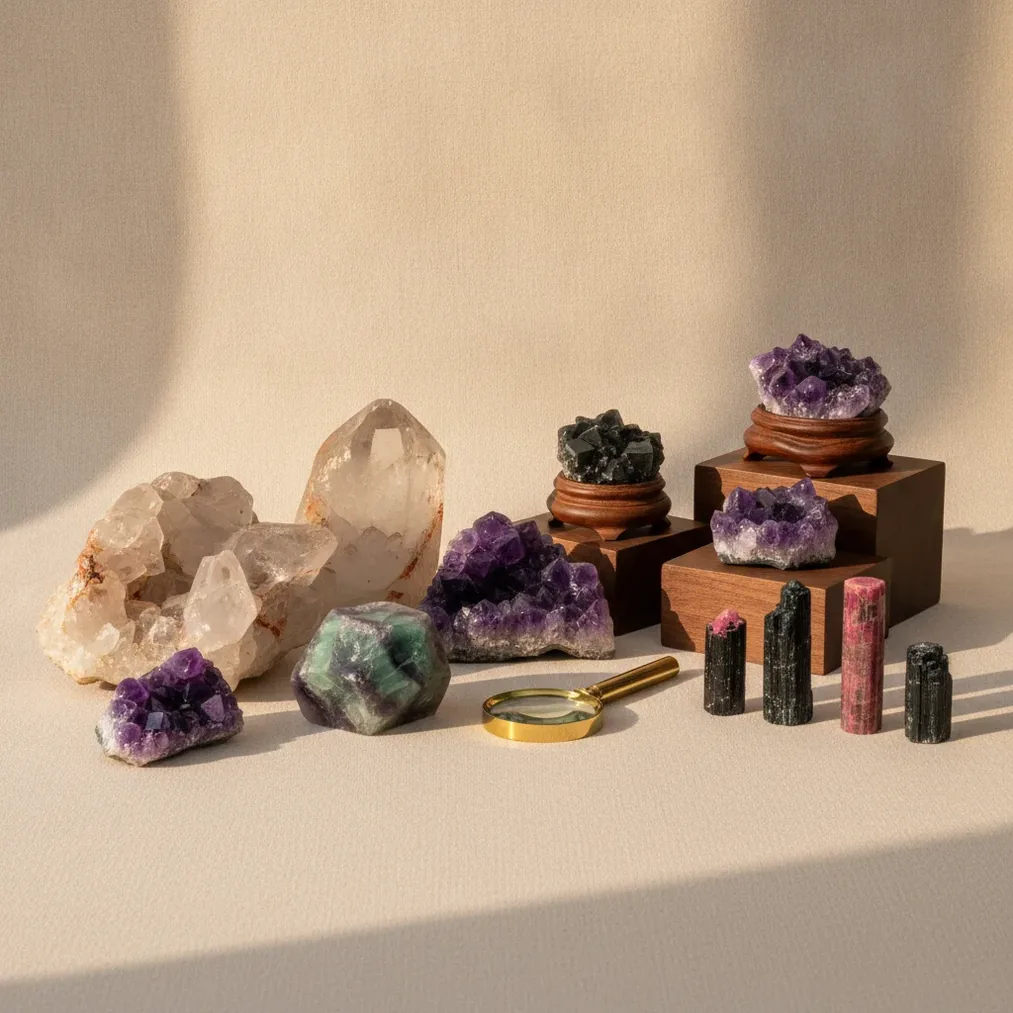
How Accurate Is a Photo-Based Crystal Value Estimate?
A clear photo can support a useful price range, but it cannot guarantee mineral identity, locality, authenticity, or a final sale price. Accuracy improves when the comparison uses the same species, dimensions, condition, crystal form, provenance, and market channel.
The rock and crystal value checker first evaluates visible features such as color, crystal sharpness, matrix, damage, and display quality. It then compares the specimen with conservative 2024–2025 ranges from eBay-style marketplaces and specialist venues. Labels and collection records should be photographed because an unsupported locality claim should not receive the same value as documented provenance.
An automated estimate is not a certified appraisal. Rare species, possible gemstones, repaired pieces, and specimens expected to exceed $1,000 may require direct examination by a qualified specialist. Last reviewed: August 19, 2026.
Where Should You Sell Rocks and Mineral Specimens?
Use general marketplaces for common $1–$100 material and specialist dealers or mineral auctions for documented specimens in the $200–$1,000+ range. Local classifieds can be more practical for heavy rocks that are expensive or difficult to ship.
- eBay: Suitable for quartz, amethyst, mixed lots, and other hobby material; the research indicates most individual specimen listings cluster below $100.
- Etsy: Commonly used for decorative crystals, tumbled stones, and mixed metaphysical assortments, including 50-piece lots around $40 in 2024–2025 observations.
- Specialist mineral dealers: Better suited to curated pieces with strong identity, aesthetics, and locality documentation, such as an Elmwood fluorite example around $250.
- Mineral auctions: Appropriate for collector material such as tourmaline around $400 or Sweet Home Mine rhodochrosite around $1,500.
- Local classifieds: Useful for bulky specimens; unattributed quartz boulders were often unsold or below $30 in 2024–2025 observations.
Why the Gemstone Market Does Not Make Every Rock Valuable
Large gemstone-market totals do not mean ordinary field rocks have high resale value. Most of the reported billions involve cut gemstones and jewelry, while rough mineral specimens are a small, largely unquantified hobby category.
Grand View Research 2024 valued the global gemstones market at $101.73 billion in 2024 and projected $183.17 billion by 2033, with a 7.0% CAGR from 2025 through 2033. The Business Research Company 2024 used a different market definition and reported growth from $29.46 billion in 2023 to $31.32 billion in 2024.
SkyQuest 2025 placed the broader gems and jewelry market at $320.12 billion in 2024, while Data Bridge Market Research 2025 estimated the gemstones market at $33.96 billion. The different totals reflect different category definitions; none shows that a common quartz point is automatically worth more than its typical $1–$15 resale range.
For the broader $101.73 billion gemstone-market context, review the 2024 global gemstones market report from Grand View Research.
Check it with one photo
The scanner on this page gives you one free check. For unlimited scans, sold-price comparisons, and identification of coins, antiques, cards, and more, the free Lens app does the same job from your phone camera.
Frequently Asked Questions
Are my rocks worth anything?
Most ordinary finds have souvenir value or sell for about $1–$20. Exceptions include attractive, undamaged specimens with a desirable mineral identity, documented locality, or strong collector provenance.
How can I tell if a crystal is valuable?
Check its mineral species, crystal sharpness, color, damage, matrix, locality, and labels. Values commonly rise from $20–$80 for attractive hobby specimens to $200–$1,000+ for exceptional documented pieces.
How accurate are photo value estimates for rocks?
A crystal value checker can provide a reasonable resale range when size, damage, crystal form, and labels are visible in a photo. It cannot confirm identity or provenance, so the result is not a certified appraisal.
Does a larger rock have more value?
Not necessarily. Large common rocks can remain unsold or bring under $30 because shipping and display are difficult, while practical 5–15 cm collector specimens are often easier to sell.
What types of crystals can be worth hundreds of dollars?
Well-formed tourmaline, beryl, topaz, rhodochrosite, wulfenite, and fluorite can reach hundreds when aesthetics and provenance are strong. Research examples include Elmwood fluorite around $250 and tourmaline on matrix around $400.
Do chips and broken crystal points reduce value?
Yes. Chips, broken points, dull surfaces, and visible glue can reduce a potential value from hundreds of dollars to tens of dollars, depending on severity and rarity.
Why does a crystal’s locality matter?
Collectors pay more for specimens tied to historically important mines and supported by credible labels. A Sweet Home Mine rhodochrosite example reached about $1,500 in 2024, while unattributed common material often stays under $20.
Where can I sell a crystal collection?
General marketplaces suit common pieces typically priced below $100. Specialist mineral dealers and auctions are better for documented $200–$1,000+ specimens, while local classifieds suit heavy rocks.