 HowMuchIsIt
Signs Your Old Stuff Is Valuable
Use this 2026 checklist to spot valuable marks, dates, variants, condition clues, packaging and ownership history.
Drop a photo of signs your old stuff is valuable here or tap to check its value
JPG, PNG, WebP, HEIC • Max 50MB • 1 free scan

Analyzing with AI…
Identifying the item and matching value clues


Quick answer: The strongest signs your old stuff is valuable are a recognized maker, specific model or edition, genuine rarity, excellent original condition and documented provenance. Age alone is not enough: common collector plates may sell for under $10–$20, while a unique 1878 Judd-1566 pattern coin sold for $439,200 in 2026. Look for reference numbers, signatures, limited-edition markings, first-edition details and professional grades. Confirm promising clues against recent sales of the exact item or variant rather than an optimistic asking price.
Last updated: August 19, 2026
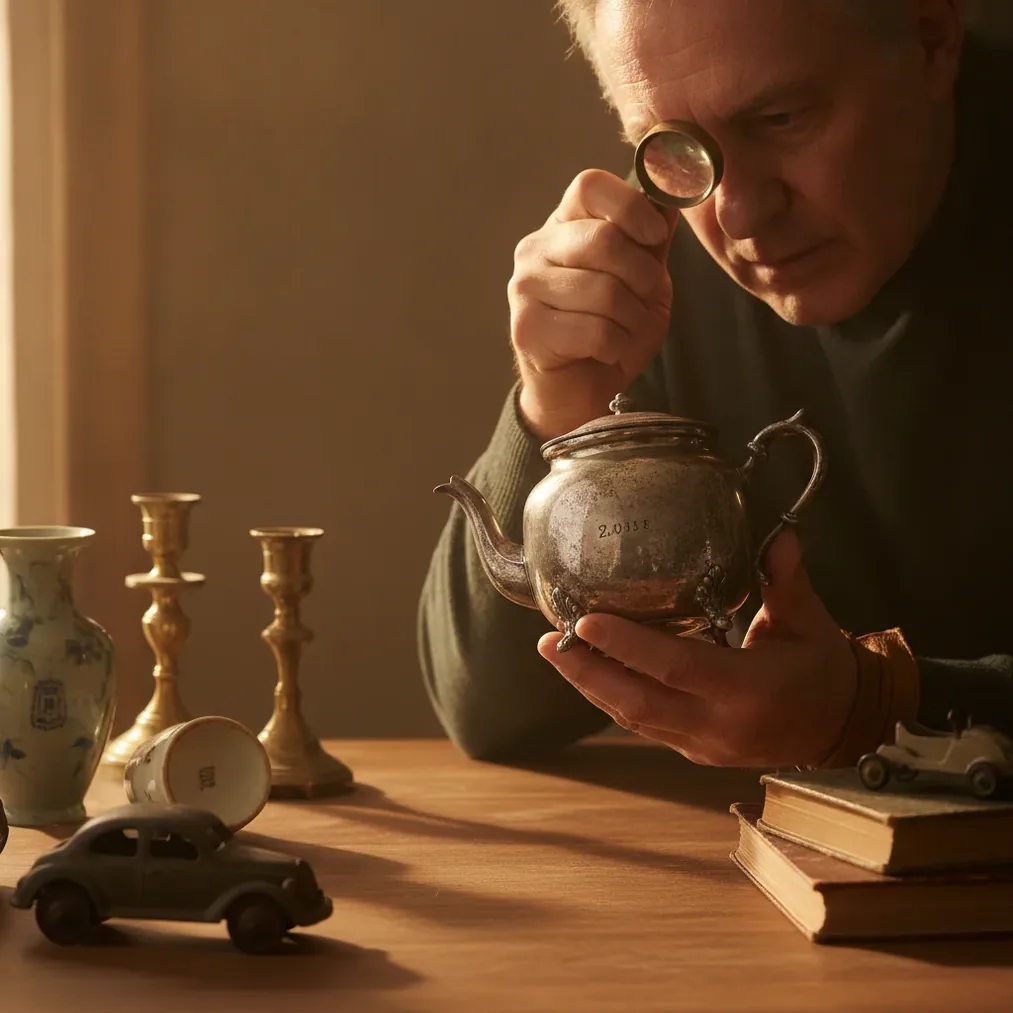
How to check the value from a photo
Photograph the entire item
Take a sharp, evenly lit photo showing the full shape, proportions and condition. Avoid filters, glare and backgrounds that hide edges.
Capture marks and date clues
Add close-ups of signatures, hallmarks, labels, serial numbers, copyright dates, card backs, title pages and model references.
Record condition and packaging
Photograph cracks, repairs, fading and missing pieces as well as boxes, certificates, dust jackets, tags or other original packaging.
Compare the exact variant
Use the photos with a tool such as Lens to identify likely matches, then compare dated sold results for the same reference, edition, grade and condition.
What are the clearest signs an old item is valuable?
The best signs are an identifiable maker, scarce variant, important date, original condition and verifiable ownership history. A single clue can justify more research, but several matching clues provide stronger evidence.
- Maker or brand: Look for a full signature, stamped company name, hallmark or printed manufacturer label. A prestigious name matters only when the mark is authentic and belongs on that item.
- Reference or catalog number: Watch references, coin varieties, card numbers and book edition statements let buyers separate valuable versions from common ones.
- Rarity: Limited production, errors, pattern designs and surviving examples in unusually high grade can command premiums.
- Important date: A first issue, rookie year or early printing may matter. An old date by itself does not establish scarcity.
- Originality: Original watch dials, unrestored comics and unaltered surfaces can be more desirable than refinished examples.
- Provenance: Receipts, correspondence, exhibition records or documented ownership can connect an object to a person or event.
- Original packaging: A correct box, dust jacket, certificate or tag may help establish identity and completeness, but packaging alone does not guarantee value.
It takes under a minute to scan an item to check its value.
Which old items and variants have sold for serious money?
Specific rare variants can sell from $18,500 into the millions, while ordinary versions of the same general category may have little value. These dated results show why exact identification is essential.
| Item and valuable signals | Sold price | Source |
|---|---|---|
| Patek Philippe Ref. 2526, first-series enamel dial, circa 1955 | $95,250 | Collectability, June 13, 2026 |
| 1878 Judd-1566 U.S. pattern quarter eagle, unique and certified | $439,200 | Stack’s Bowers and Numismatic News, 2026 |
| Babe Ruth M101-5-151 rookie card, NM7 | $1.42 million | Goldin and ArtHitParade, March 7, 2026 |
| LeBron James 2003 Topps Chrome Gold Refractor rookie, PSA 10, numbered to 50 | $1.11 million | Fanatics Collect and Athlon Sports, 2026 |
| Superman No. 1 from 1939, unrestored high-grade copy | About $9 million | Artnet News, 2025 |
| Shackleton’s The Heart of the Antarctic, complete first edition | $34,000 | AbeBooks, January–March 2026 |
| Thomas Paine’s Common Sense, early unrestored printing | $18,500 | AbeBooks, January–March 2026 |
These are exceptional sales, not typical prices for watches, coins, cards, comics or books. Match the precise date, reference, printing, grade and restoration status before treating a result as comparable.
How do marks, dates and rarity affect value?
Marks and dates affect value when they identify a desirable maker or scarce version; they do not create value automatically. Research every character because a small reference, back variation or edition statement can separate a major collectible from a common item.
The 1878 date and Judd-1566 designation identified the unique pattern quarter eagle that brought $439,200 at Stack’s Bowers in 2026. On cards, the 2003 Topps Chrome Gold Refractor designation, rookie status, PSA 10 grade and limitation to 50 supported the LeBron James card’s $1.11 million result, per Athlon Sports 2026.
Books require similarly precise checks. The Shackleton copy that sold for $34,000 through AbeBooks in early 2026 was a complete first edition, not simply an old copy of the same title. Photograph marks before cleaning because polishing, erasing or removing labels can destroy evidence needed for identification.
Why do condition, provenance and packaging matter?
Condition and provenance can determine whether an item is a record-setting example or merely a damaged collectible. Original packaging supports completeness and identification, but documentation connecting an object to an important person or event can be much more significant.
Abraham Lincoln’s leather gloves carried to Ford’s Theatre sold for $1,512,500 at Freeman’s | Hindman on May 21, 2025, according to Antique Trader 2026. Their value depended on documented historic use, not simply their age or material.
Condition standards vary by category. Collectors may examine an unpolished watch case, original dial, coin surfaces, card corners, comic restoration, book completeness or an intact dust jacket. Do not repair, polish, reframe or repackage a promising object before a specialist reviews it. Photograph damage honestly and keep receipts, letters, old photographs and certificates together.
Which supposedly valuable old items are usually worth little?
Most old household goods are worth little unless they have exceptional rarity, attribution, condition or provenance. The most common myth is that age alone creates a high price.
| Common item | Reality |
|---|---|
| Unsigned 20th-century cut glass | A vase-and-bowl pair estimated at $800–$1,200 sold for $500, per Antique Trader 2025. |
| Mass-produced collector plates and figurines | Common examples often sell for under $10–$20 each, per Antique Trader’s 2025 reporting on struggling collectibles. |
| Modern base sports cards | Many are worth only cents; major prices concentrate in scarce parallels, rookie cards and errors, per Athlon Sports 2026. |
| Ordinary modern books and magazines | Most are near-worthless unless signed, first edition or tied to a major event, per McCook 2026. |
Unattributed traditional furniture can also be difficult to sell because of oversupply and changing taste, according to Antique Trader 2025. A famous designer attribution can matter, but family stories without labels, records or expert support are not proof.
How should you verify what your old stuff is worth?
Verify value with exact, recent sold comparables and specialist review when the evidence suggests a rare or high-value item. A photo estimate is a starting range, not a certified appraisal, authentication or guarantee of a future sale price.
- Identify the category, maker, date, model, edition and variant from clear photographs.
- Compare completed sales for the same item, not active listings or broadly similar objects.
- Adjust for grade, damage, restoration, completeness, provenance and selling venue.
- Seek the appropriate grader, authenticator or certified appraiser before insuring, selling or altering a potentially important item.
Market prices can change sharply. ArtHitParade 2026 reported that one Babe Ruth card moved from about $7 million in 2023 to $4.026 million at Heritage in October 2025, a decline of more than $3 million, or roughly 43%.
Methodology: This guide uses documented 2025–2026 auction and marketplace results supplied by named collecting and market sources. Results are examples rather than universal price ranges. Last reviewed August 19, 2026. The documented $439,200 pattern-coin result was reported by Stack’s Bowers Galleries.
Check it with one photo
The scanner on this page gives you one free check. For unlimited scans, sold-price comparisons, and identification of coins, antiques, cards, and more, the free Lens app does the same job from your phone camera.
Frequently Asked Questions
How do I know if something old is valuable?
Look for a recognized maker, exact reference, scarce edition, high original condition and documented history. Then find recent sold results for the identical variant rather than relying on age or asking prices.
Does being 100 years old make an item valuable?
No. Age can support collectibility, but common supply and weak demand can keep an old object inexpensive; rarity, condition, attribution and provenance are usually more meaningful.
What markings should I look for on old items?
Check undersides, backs, clasps, title pages and packaging for signatures, hallmarks, serial numbers, reference numbers, dates and edition statements. Photograph the marks clearly and do not polish or remove labels.
Does original packaging increase an old item’s value?
Original boxes, tags, certificates and dust jackets can establish completeness and help identify a variant. Their effect depends on the category, and packaging does not make an otherwise common item valuable.
How accurate are photo value estimates?
A photo estimate can narrow the category and suggest comparable sales, but it may miss restoration, authenticity problems or subtle variants. Treat it as preliminary information rather than a certified appraisal.
Should I clean an old item before selling it?
Do not clean, polish or repair a potentially valuable item before specialist review. Altering surfaces, labels, watch cases, coins, paper or original finishes can remove identification evidence and affect condition.
Are asking prices reliable evidence of value?
No. Asking prices show what a seller hopes to receive, while completed sales show what a buyer actually paid at a specific time and venue.