 HowMuchIsIt
Antique Value Checker
Photograph your antique with Lens to identify possible maker marks, compare price ranges, and estimate its resale value.
Drop a photo of antique here or tap to check its value
JPG, PNG, WebP, HEIC • Max 50MB • 1 free scan

Analyzing with AI…
Identifying the item and matching value clues


Quick answer: An antique value checker estimates what an item may sell for by comparing its type, maker marks, age, condition, and provenance with relevant market data. Common or damaged antiques often fall between $10 and $50, typical named-maker pieces may bring $75–$300, and scarcer signed examples can reach $300–$1,500. Documented designer furniture, early silver, and other high-end pieces may sell for $1,500–$10,000 or more. A photo-based result is an automated estimate, not a certified appraisal or guarantee of a sale price.
Last updated: August 19, 2026
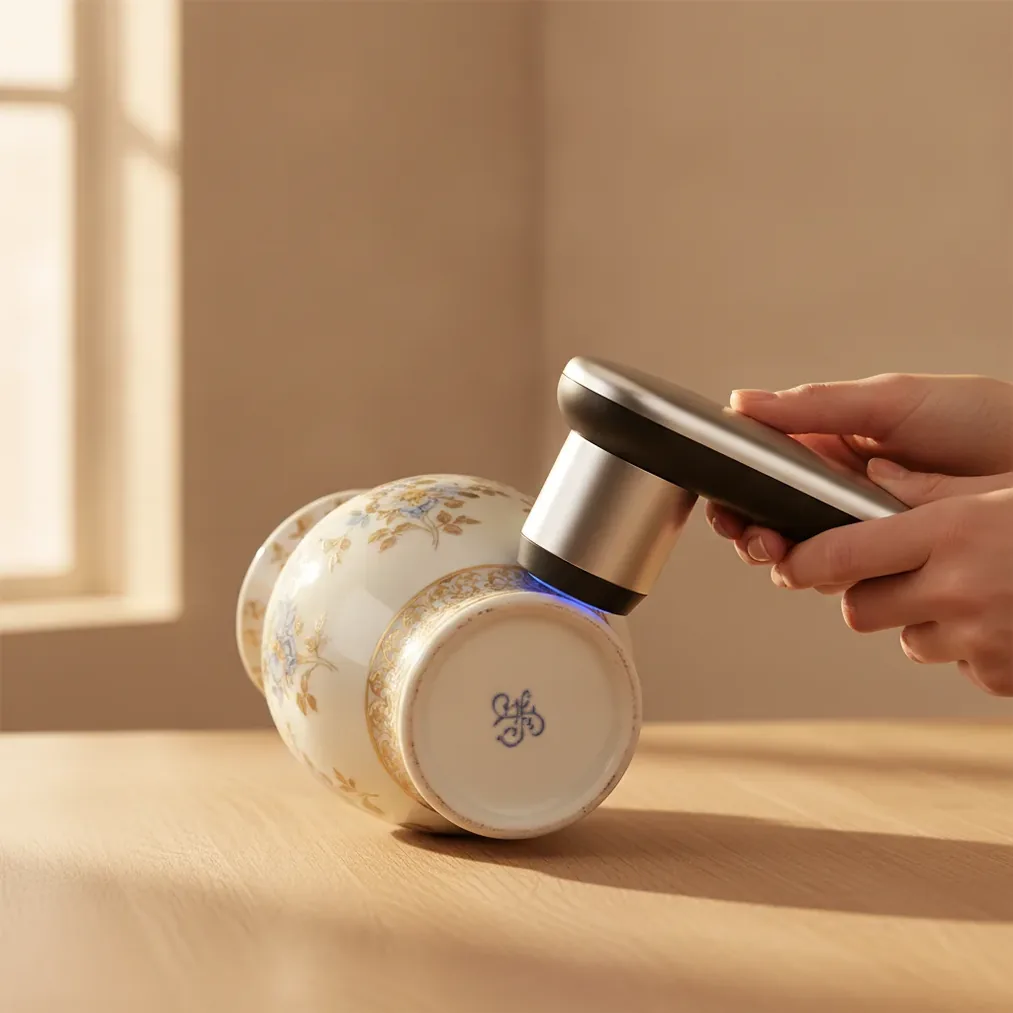
How to check the value from a photo
Photograph the whole antique
Use bright, indirect light and capture the front, back, sides, base, and scale. Include separate photos of damage, hardware, labels, and construction details.
Capture every mark
Take a sharp close-up of signatures, backstamps, hallmarks, date letters, paper labels, and branded furniture marks. A clear mark can separate a $40 object from a $400 example.
Review the likely identification
Check the suggested maker, material, period, and object type against the photographs. Do not accept an identification when the mark, dimensions, or construction is inconsistent.
Compare equivalent sales
Use sold examples with the same maker, pattern, material, size, and condition. Adjust for chips, restoration, missing parts, provenance, and the fees or shipping costs of the intended marketplace.
How much is my antique worth?
Most everyday antiques are worth $10–$300, while signed, scarce, or documented pieces may bring $300–$10,000 or more. These are indicative 2025–2026 price bands based on pre-2024 eBay, Ruby Lane, Etsy, LiveAuctioneers, and regional-auction trends, not guaranteed sale prices.
| Value tier | Typical range | Common examples |
|---|---|---|
| Low | $10–$50 | Unmarked pressed glass, souvenir china, incomplete sets, damaged pieces, and later antique-style décor |
| Typical | $75–$300 | Noritake or Limoges export ware, clean Scandinavian ceramics, modest oak furniture, and many complete china sets |
| Upper mid | $300–$1,500 | Recognized marks, scarce patterns, early Rookwood, desirable small furniture, and signed pieces in very good condition |
| High | $1,500–$10,000+ | Documented designer furniture, major silversmiths, Tiffany Studios, notable provenance, and design icons |
Sentimental value does not establish resale value. Many inherited mid-20th-century dinner services sell for $50–$300, although scarce patterns, near-mint condition, and high piece counts can move a set toward $500 or more.
You can find out what your item is worth in seconds with a single clear photo.
Why can identical-looking antiques differ by 10 times?
Two antiques with the same shape can differ by 10 times or more because one is period-made, correctly marked, and intact while the other is a reproduction, damaged, or unmarked. Authentication details carry more weight than visual similarity alone.
| Factor | Raises value | Lowers value |
|---|---|---|
| Maker | Verified factory, designer, or studio mark | Generic, absent, altered, or spurious mark |
| Date | Correct period construction and date code | Later revival or mass-produced copy |
| Material | Sterling silver or period materials | Silverplate, modern glass, or substitute materials |
| Condition | Original finish and honest wear | Cracks, chips, replaced parts, or heavy refinishing |
| Provenance | Invoices, labels, catalogues, or ownership history | Unsupported family story or no documentation |
A verified Hans J. Wegner chair with a Carl Hansen & Søn label may reach $1,000–$5,000 or more per chair, while an unmarked Danish-style chair may sell for $150–$400. An original Gustav Stickley armchair has reported auction ranges of $1,000–$3,000 from the 2010s through early 2020s, compared with $100–$300 for a similar mission-style reproduction.
Which maker marks matter most?
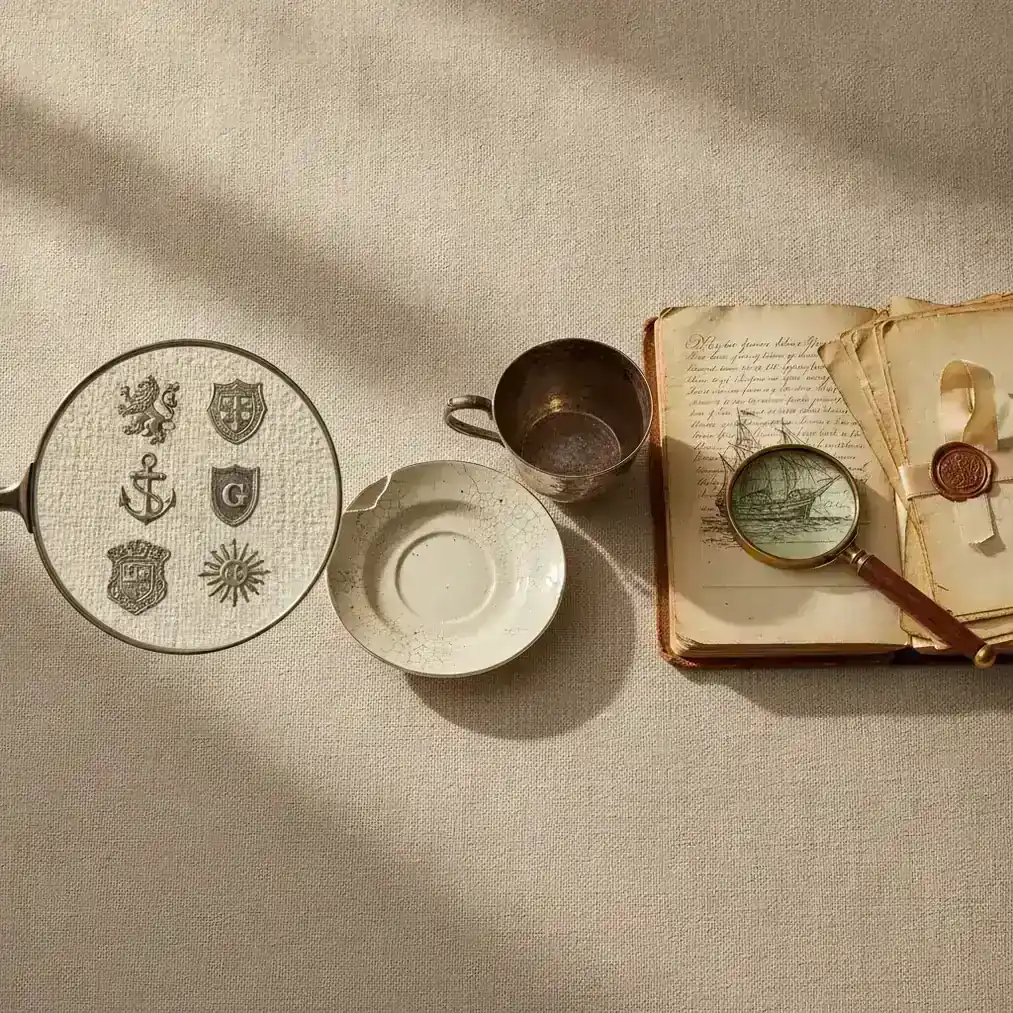
Marks matter when they can be matched to the correct maker, factory period, and object; a familiar-looking stamp alone does not prove authenticity. Photograph the mark and the entire piece because reproductions and spurious marks can imitate valuable originals.
- Ceramics: Crossed-swords Meissen marks, Royal Worcester marks, Wedgwood marks, and Rookwood date codes can identify a factory and production period.
- Silver: City marks, date letters, maker marks, assay symbols, and the word “STERLING” support precious-metal identification. “EPNS” or “plate” identifies silverplate, which usually sells for less.
- Furniture: Branded underside marks, manufacturer labels, paper tags, joinery, and original hardware can distinguish designer furniture from later copies.
- Studio work: Etched glass signatures and pottery marks associated with makers such as Axel Salto or Berndt Friberg may increase demand compared with unsigned work in the same style.
A full sterling flatware service by Gorham, Tiffany & Co., or Georg Jensen may sell for $1,000–$5,000 depending on weight and pattern. A visually similar silver-plated service may bring only $50–$200.
How do condition and provenance affect antique value?
Cracks, chips, repairs, and replaced parts can reduce an antique’s value by 30%–70%, while strong documentation can add 20%–100% or more to museum-quality material. Original condition is not the same as perfect condition: light wear and patina may be preferable to aggressive restoration.
For ceramics and glass, inspect rims, handles, bases, and projecting details for hairlines, filled chips, glue, overpainting, or staple repairs. For furniture, record replaced legs, arms, hardware, upholstery, stripped finishes, and new stain. Over-polished silver and refinished furniture can lose value when the work removes an original surface or signature.
Useful provenance includes dated receipts, retailer labels, gallery records, exhibition catalogues, and a documented chain of ownership. A family story may help research, but buyers generally pay a premium only when the history can be supported.
What do real antique sale examples show?
Recorded examples show that attribution, marks, and condition create price gaps ranging from hundreds to millions of dollars. The comparisons below are pre-2024 illustrations and should be checked against current sold results before pricing an item.
| Object | Authenticated or collectible example | Similar lower-value example |
|---|---|---|
| Tiffany-style lamp | Tiffany Studios Dragonfly lamp: about $2.7 million at Christie’s New York in 2018 | Later unsigned lamp with modern glass: typically under $500 |
| Meissen figure | 18th-century marked figure: $500–$5,000+ in major auctions before 2024 | Later German or Asian copy: $30–$150 online |
| Depression glass | Scarce original pink Cherry Blossom: $20–$100 per piece | Reproduction or heavily scratched piece: $5–$15 |
| China service | Scarce, complete, near-mint pattern: toward $500+ | Many Noritake or Haviland sets: $50–$300 |
The Christie’s result is exceptional, not a typical lamp value. Its original shade and base plus strong provenance explain why it cannot be compared directly with a decorative modern copy.
How are photo-based antique estimates calculated?
A useful antique value lookup begins with identification, narrows the object by maker and period, and then compares equivalent market ranges after condition adjustments. A single photo cannot reliably confirm age, precious-metal content, concealed repairs, or authenticity.
- Classify the object type, material, style, and approximate period.
- Read visible marks, signatures, date codes, labels, and hallmarks.
- Compare the dimensions, pattern, construction, and mark with likely matches.
- Use the closest sold ranges rather than unsold asking prices.
- Adjust for condition, restoration, completeness, provenance, location, and selling costs.
For high-value silver, designer furniture, early porcelain, or an object with disputed authorship, seek an appropriate specialist before sale, insurance, tax, or estate decisions. An automated result is not a certified appraisal. Last reviewed: August 19, 2026.
Where should I sell an antique?
Sell common $10–$300 pieces where costs and shipping are manageable, but offer scarce or documented $1,500+ objects through a specialist familiar with the category. The best venue depends on value, size, buyer reach, fees, and the risk of shipping damage.
- Local marketplace: Practical for bulky oak furniture or fragile sets when pickup avoids packing and freight.
- General online marketplace: Suitable for identifiable ceramics, glass, flatware, and replaceable pieces with searchable maker or pattern names.
- Regional auction house: Useful for mixed estates, furniture, silver, and objects that benefit from inspection.
- Specialist auction or dealer: Better for verified Meissen, Tiffany Studios, designer furniture, major silver, or documented provenance.
Before accepting an offer, compare the likely net amount after commissions, payment charges, packing, shipping, insurance, and returns. A $300 local sale can produce a better net result than a higher online price burdened by shipping and fees.
Exceptional objects may require specialist comparison with records such as Christie’s auction results, including the approximately $2.7 million Tiffany Studios Dragonfly lamp sale in 2018.
Check it with one photo
The scanner on this page gives you one free check. For unlimited scans, sold-price comparisons, and identification of coins, antiques, cards, and more, the free Lens app does the same job from your phone camera.
Frequently Asked Questions
How accurate are photo antique value estimates?
A photo estimate can identify likely categories, marks, and price bands, but accuracy depends on clear images and correct attribution. It cannot confirm concealed repairs, material composition, age, or authenticity, so valuable items should receive in-person specialist review.
Can a maker’s mark tell me how much an antique is worth?
A verified maker’s mark can move an object from tens of dollars to hundreds or thousands, but the mark must match the correct factory period and object. Condition, rarity, material, and provenance still affect the final value.
Does being over 100 years old make an antique valuable?
Age alone does not guarantee value. Common, damaged, or low-demand antiques may sell for $10–$50, while younger mid-century designer furniture can bring $1,000–$5,000 or more when properly labeled.
How much does damage reduce antique value?
Cracks, chips, glued parts, filling, and other repairs can reduce ceramics or glass by 30%–70% according to the pre-2024 auction trends in the supplied research. The effect depends on rarity, visibility, and whether the repair affects a key feature.
Are inherited china sets valuable?
Many mid-20th-century Noritake and Haviland services sell for $50–$300. Scarce patterns, near-mint condition, completeness, and high piece counts can move some sets toward $500 or more.
Is sterling silver worth more than silverplate?
Usually, because sterling contains precious metal and is identified by hallmarks or “STERLING.” Named sterling services may bring $1,000–$5,000, while comparable silver-plated sets may sell for $50–$200.
Should I clean an antique before checking its value?
Avoid aggressive polishing, stripping, repainting, or refinishing before identification. Original patina and finishes may support value, while over-polished silver or stripped furniture can lose value.