 HowMuchIsIt
Pawn Shop Value Estimator
Scan an item photo to estimate resale value, then see a realistic pawn offer range based on the typical 25–60% payout.
Drop a photo of pawn shop value estimator here or tap to check its value
JPG, PNG, WebP, HEIC • Max 50MB • 1 free scan

Analyzing with AI…
Identifying the item and matching value clues


Quick answer: A pawn shop value estimator should calculate about 25–60% of an item’s realistic resale value, not its original retail price. An item likely to resell for $200 could receive a pawn offer of roughly $50–$120. National Pawnbrokers Association data cited by AmeriSave in 2026 puts the average U.S. pawn loan at about $150. A photo estimate is a starting point; the shop’s final offer depends on the resale value it expects to recover.
Last updated: August 19, 2026
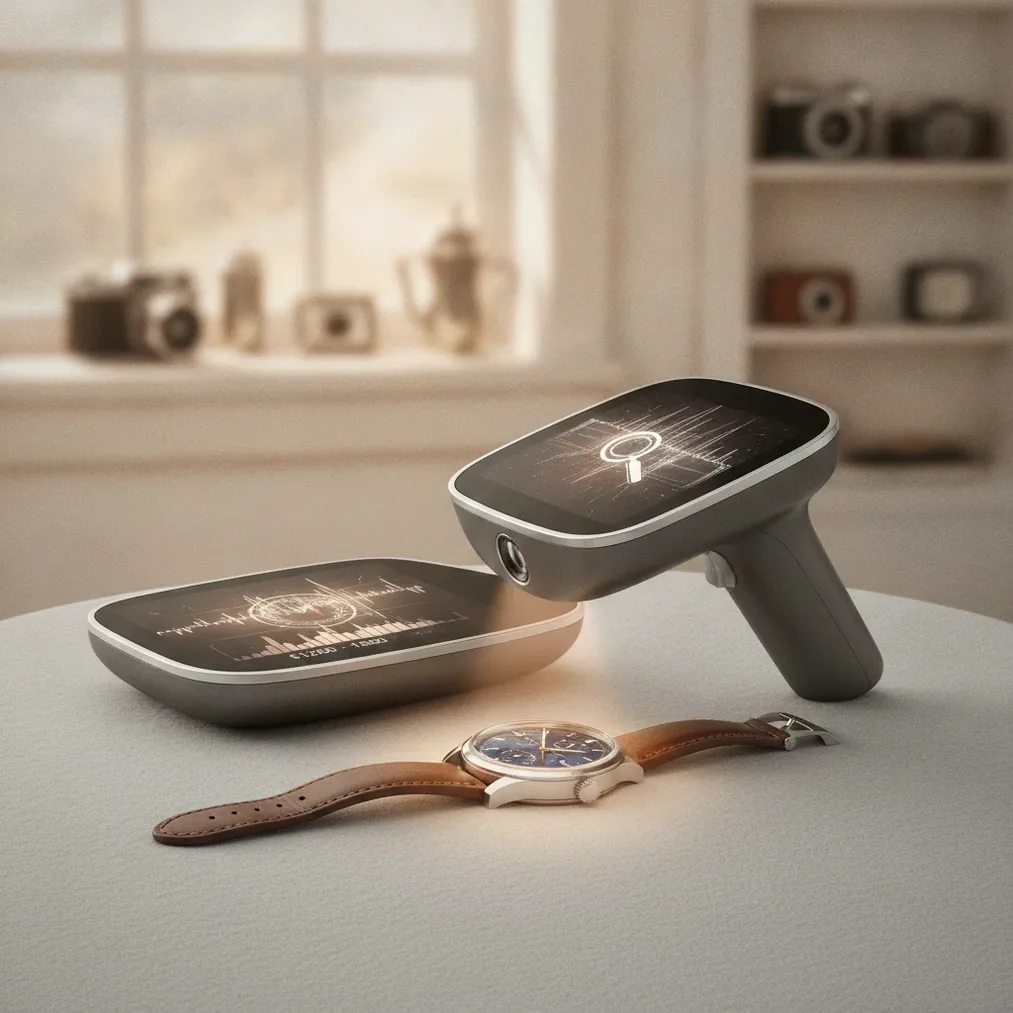
How to check the value from a photo
Photograph the item
Take a clear photo showing the whole item. Add images of model markings, labels or visible wear when available.
Scan for a resale estimate
Upload the photo to the Lens scan tool to identify the likely item type and establish a starting resale-value range.
Check comparable condition
Compare the estimate with sold listings in the same condition. Retail price is not the correct basis for a pawn offer.
Apply the pawn percentage
Multiply realistic resale value by 25–60%. For a $500 resale estimate, the broad pawn range is $125–$300, although the final shop quote may differ.
How much will a pawn shop give me?
A pawn shop will typically offer or lend about 25–60% of realistic resale value. AmeriSave’s 2026 consumer guide cites National Pawnbrokers Association data for this range and reports an average nationwide pawn loan of about $150.
| Estimated resale value | 25% offer | 60% offer |
|---|---|---|
| $100 | $25 | $60 |
| $200 | $50 | $120 |
| $300 | $75 | $180 |
| $500 | $125 | $300 |
| $600 | $150 | $360 |
These are broad value tiers, not guaranteed quotes. Most ordinary items produce modest loans; higher offers require enough expected resale value to support them.
You can also estimate your item’s resale value from one clear photo.
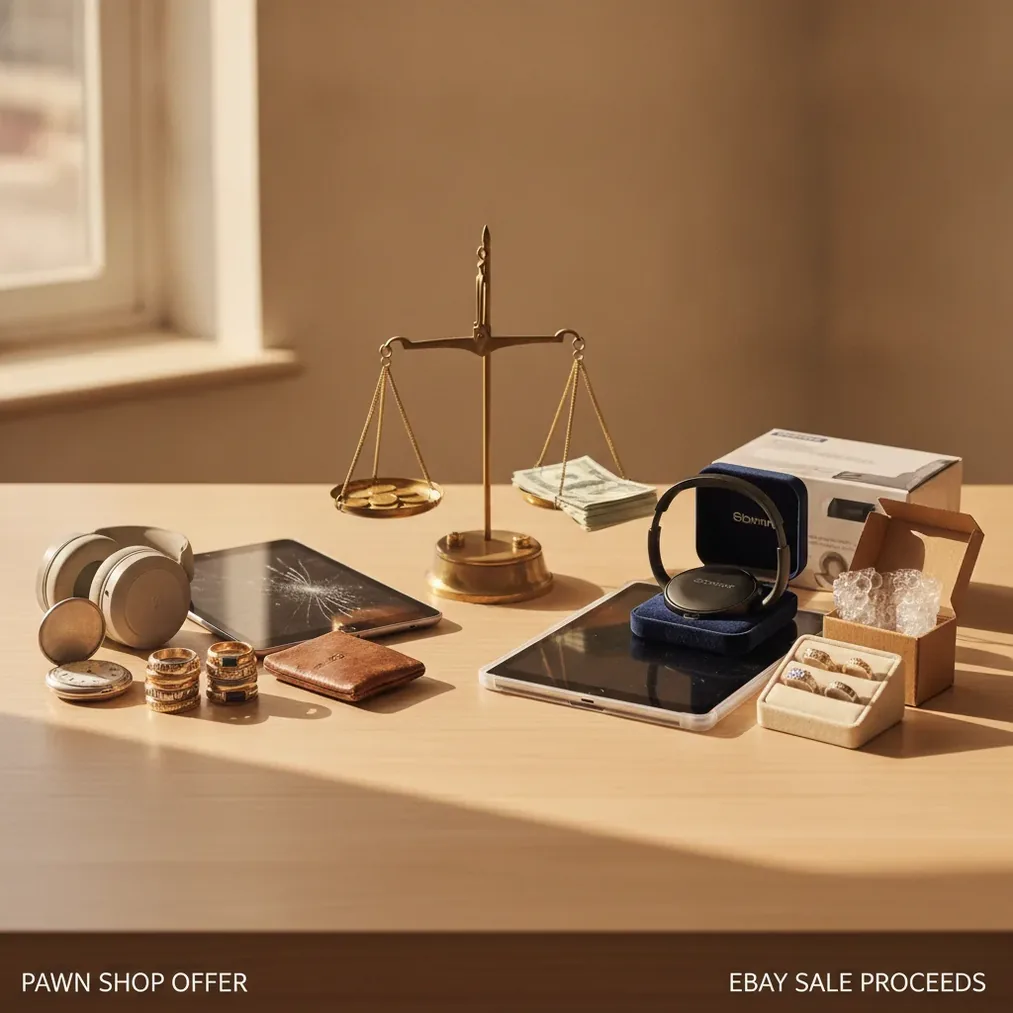
Typical pawn offers versus eBay sold-value benchmarks
Direct selling can return more than pawning, but the seller must subtract marketplace fees. The 2026 examples below use the supplied resale benchmarks, pawn percentages and stated eBay fee assumptions; they are modeled comparisons rather than individual verified transactions.
| Example category | Resale or sold-price benchmark | Pawn offer | Modeled eBay net |
|---|---|---|---|
| Generic consumer item | $200 | $50–$120 | $172.60 |
| Small electronics or game console | $300 | $90–$150 | $260.60 |
| Mid-range watch or jewelry | $500 | $150–$300 | $424.60 |
The $200 example uses an approximately 13.5% fee plus $0.40; the $300 example uses 13% plus $0.40; and the $500 jewelry example uses 15% plus $0.40. Shipping, packing, returns and seller time are not included.
What determines a pawn shop price estimate?
Expected resale value is the main basis of a pawn shop price estimator, while original retail price is not. A 2026 U.S. pawn-industry update describes offers as loan-to-value calculations tied to what the shop can realistically resell.
| Factor | How it affects the estimate |
|---|---|
| Realistic resale value | Sets the value ceiling before the 25–60% pawn range is applied. |
| Original retail price | Does not establish the offer if current resale is lower. |
| Item category | Changes the resale market and, for direct sales, the applicable marketplace fee. |
| Collateral risk | Conservative loan-to-value ratios help cover the shop if the loan is not repaid. |
| Gold value | Can move loan sizes; Russia’s average pawn loan rose from ₽16,000 to ₽21,000 in 2024 partly because of higher gold prices, according to its central bank in 2025. |
How condition affects a photo estimate
A photo estimate is most useful when the image represents the item’s actual condition, but it cannot confirm every functional or authenticity detail. Compare sold items with similar visible wear rather than using the cleanest or highest-priced listing.
- Photograph the front, back and identifying marks.
- Show scratches, damage or missing components instead of hiding them.
- Use the same condition level when choosing a resale comparable.
- Treat an automated result as an estimate, not a certified appraisal or guaranteed pawn quote.
Most common electronics, tools and fashion items are worth much less than their original retail price once the resale market becomes the benchmark.
Should you pawn the item or sell it yourself?
Pawning usually produces less cash than a successful direct sale because the typical offer is only 25–60% of resale value. Selling may produce a higher net, but eBay fees for most categories are commonly around 13–13.6% plus a $0.30–$0.40 per-order fee under the cited 2025 tables.
For a $200 item, the modeled pawn range is $50–$120, compared with about $172.60 after the example eBay fee and before shipping or packing. For a $500 watch or jewelry item, the modeled comparison is $150–$300 from a pawn shop versus $424.60 after a 15% fee and $0.40 order charge.
A pawn shop may suit someone prioritizing a collateral-backed loan, while eBay or another resale market may suit someone prioritizing a larger potential return and willing to handle the sale process.
Pawn value estimator methodology and limits
This estimator starts with realistic resale value and applies the research-backed 25–60% pawn range. It does not use original retail price, promise approval or replace the shop’s inspection.
- Identify the probable item from the submitted photo.
- Estimate a resale range using comparable items rather than retail pricing.
- Apply the 25–60% loan-to-resale range reported by AmeriSave in 2026.
- Present a range because no single percentage applies to every item or shop.
The eBay comparisons use the specific 2025–2026 fee assumptions supplied for each example. Actual net proceeds can be lower after shipping, packing or returns. Last reviewed: August 19, 2026.
The 25–60% payout range and approximately $150 average U.S. loan are reported in AmeriSave’s 2026 pawn loan guide, which cites National Pawnbrokers Association data.
Check it with one photo
The scanner on this page gives you one free check. For unlimited scans, sold-price comparisons, and identification of coins, antiques, cards, and more, the free Lens app does the same job from your phone camera.
Frequently Asked Questions
What percentage of value do pawn shops pay?
Pawn shops typically lend about 25–60% of an item’s realistic resale value, according to NPA data cited by AmeriSave in 2026. The percentage is applied to resale value, not original retail price.
How much will a pawn shop give me for a $200 item?
If $200 is the realistic resale value, the typical 25–60% range suggests about $50–$120. The final quote can differ after the shop examines the item.
What is the average pawn shop loan?
The average U.S. pawn loan is about $150, based on National Pawnbrokers Association data cited by AmeriSave in 2026. That average indicates many pawn transactions involve relatively small loans.
Do pawn shops use retail price to calculate offers?
No. Pawn offers are based on expected resale value rather than what the item originally cost, according to 2026 pawn-industry commentary.
Is it better to pawn an item or sell it on eBay?
Selling on eBay can return more, but typical final value fees are around 13–13.6% for most categories, plus a per-order fee. Pawning generally pays less but does not require completing a marketplace sale.
How accurate are photo-based pawn value estimates?
A photo estimate can provide a starting resale range and a modeled 25–60% pawn range. It cannot verify every condition, function or authenticity issue, so it is not a certified appraisal or guaranteed offer.
Why is a pawn offer lower than resale value?
The shop must protect against the risk that the loan is not repaid and the item must be resold. That is why typical loans are limited to about 25–60% of expected resale value.